The trauma bond: why leaving feels emotionally impossible
A trauma bond is a powerful emotional attachment formed through cycles of affection, pain, manipulation, and emotional inconsistency. Victims often feel deeply connected to the person hurting them — even when the relationship becomes destructive.

What is a trauma bond?
A trauma bond is a psychological attachment created through repeated cycles of emotional reward and emotional pain. In narcissistic relationships, moments of affection are mixed with criticism, rejection, manipulation, and emotional instability.
This inconsistency creates intense emotional dependency. The victim becomes emotionally focused on regaining approval, connection, affection, and emotional safety from the narcissist.
Survivors often describe the trauma bond as:
Signs of a trauma bond
Trauma bonds often create emotional confusion, dependency, self-blame, and difficulty leaving toxic relationships.
Repeated cycles
Affection and abuse alternate in a repeating emotional pattern.
Emotional addiction
You crave validation and emotional closeness despite the pain.
Loss of self
Your needs, identity, and boundaries slowly disappear.
Minimizing the abuse
You justify harmful behavior or focus only on the good moments.
Self-blame
You begin believing the relationship problems are entirely your fault.
Difficulty leaving
Even when you recognize the abuse, emotionally detaching feels terrifying.
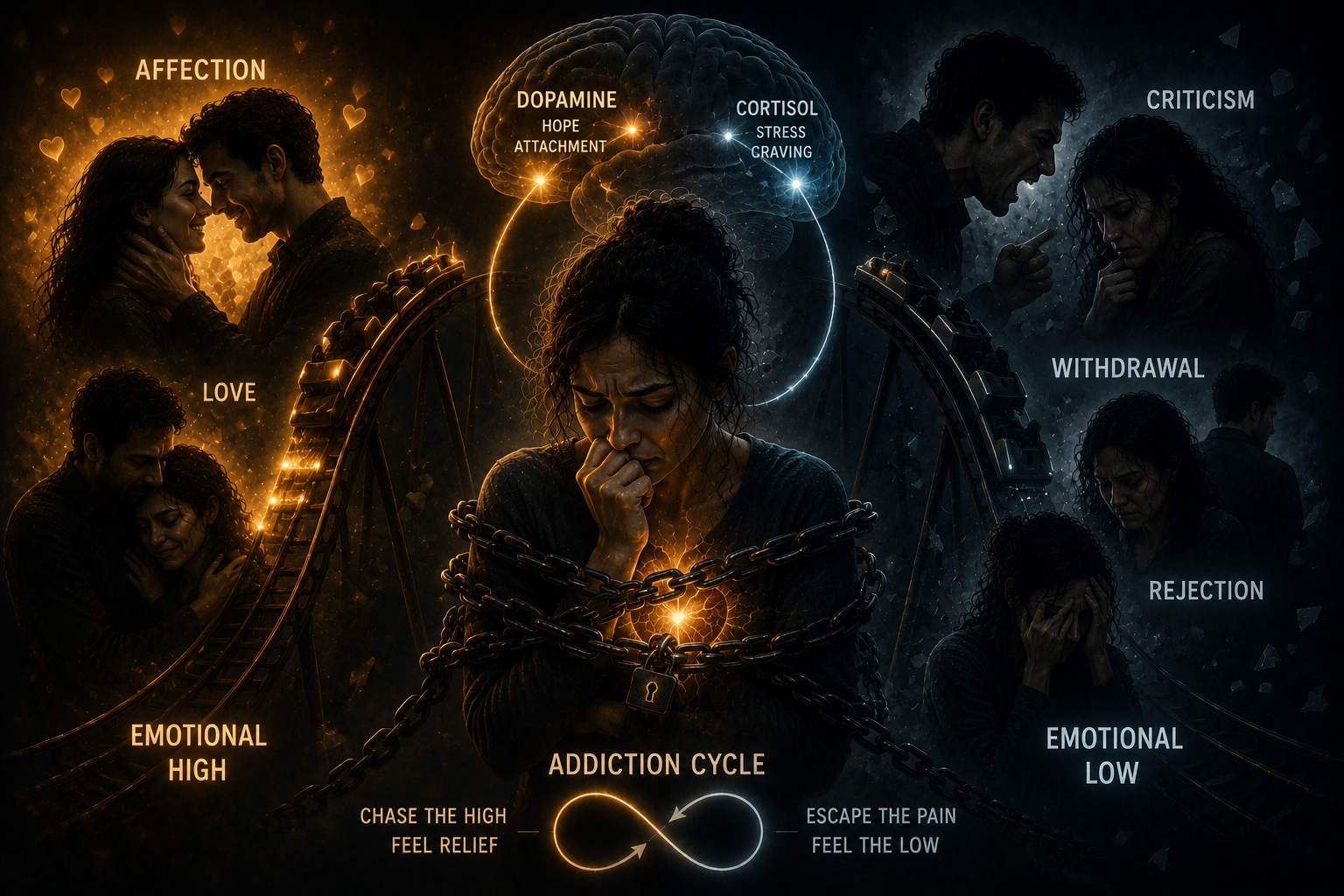
Why trauma bonds feel addictive
Trauma bonds are reinforced through emotional unpredictability. Moments of affection activate hope and attachment, while criticism, rejection, or withdrawal create anxiety and emotional craving.
The brain becomes conditioned to chase emotional relief and approval, similar to the psychological patterns seen in addiction cycles.
Survivors may stay in harmful relationships because the emotional highs temporarily relieve the pain caused by the emotional lows.
Understanding trauma bonds can help you break free
The Narcescape guide helps survivors understand emotional manipulation, trauma bonding, narcissistic abuse patterns, and recovery strategies for rebuilding emotional freedom and inner peace.
Start your escape