The collapse phase: when your mind and body begin shutting down
The collapse phase happens when prolonged emotional manipulation, stress, trauma bonding, anxiety, and psychological exhaustion overwhelm the nervous system. Many survivors feel emotionally numb, mentally drained, disconnected, and unable to function normally.

What is the collapse phase?
The collapse phase is the stage where emotional exhaustion becomes impossible to ignore. After extended exposure to manipulation, criticism, gaslighting, anxiety, and emotional instability, the nervous system may begin entering survival mode.
Survivors often describe feeling emotionally detached, mentally foggy, physically exhausted, or completely overwhelmed. Many begin questioning their identity, reality, and ability to continue functioning normally.
This stage is often experienced as:
Signs of emotional collapse
Long-term narcissistic abuse can severely affect the nervous system, emotional regulation, self-worth, and psychological stability.
Extreme exhaustion
Emotional stress leaves you physically and mentally drained.
Brain fog
Concentration, memory, and decision-making become difficult.
Emotional numbness
You may feel detached from yourself, others, or reality.
Anxiety and hypervigilance
Your nervous system stays stuck in survival mode.
Loss of identity
You begin forgetting who you were before the relationship.
Emotional shutdown
Your mind and body begin emotionally disconnecting to survive.
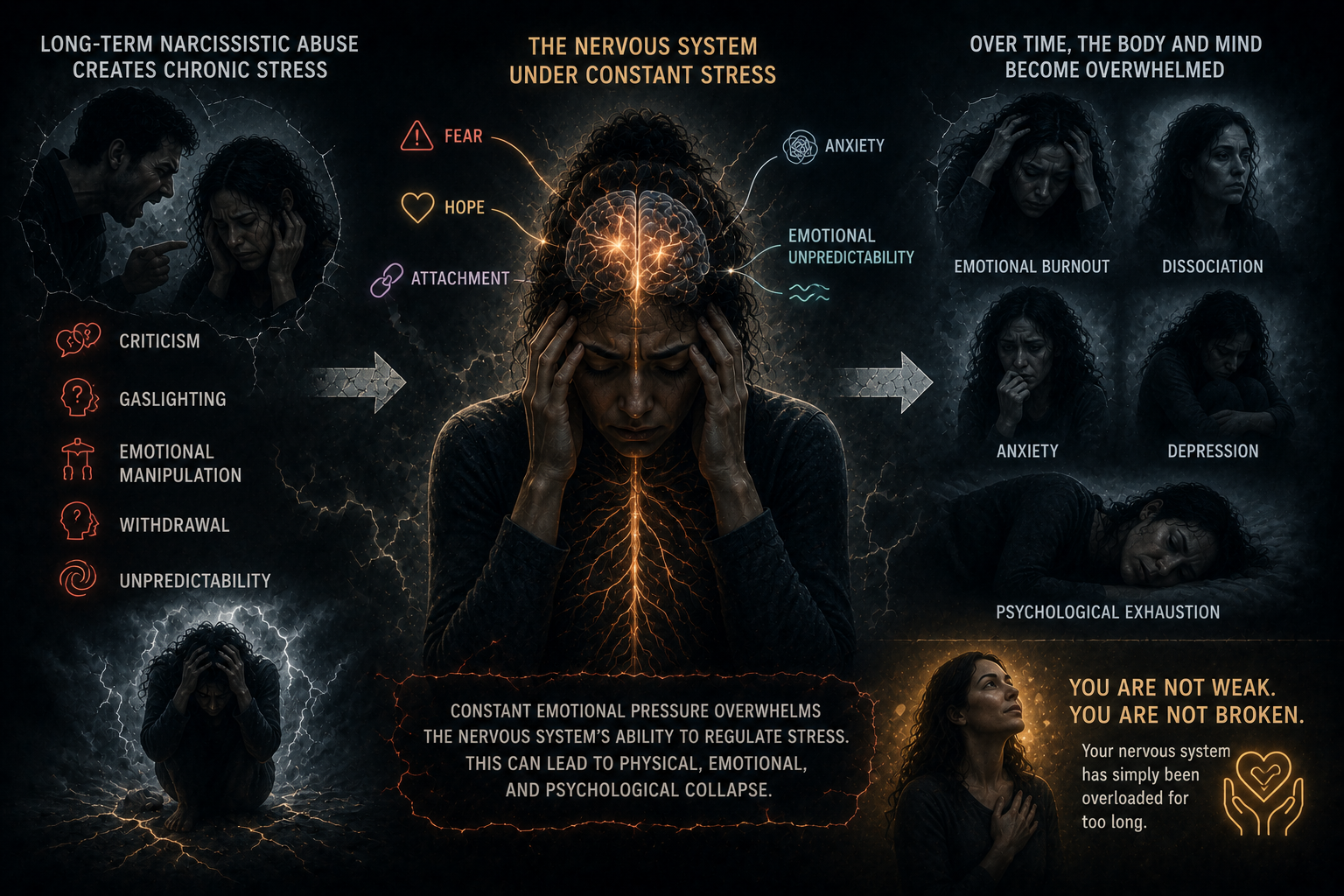
Why emotional collapse happens
Long-term narcissistic abuse places the nervous system under continuous emotional stress. The brain becomes trapped between fear, hope, attachment, anxiety, and emotional unpredictability.
Over time, this constant emotional pressure can overwhelm the body’s ability to regulate stress, leading to emotional burnout, dissociation, anxiety, depression, and psychological exhaustion.
Many survivors wrongly believe they are weak or broken, when in reality their nervous system has simply been overloaded for too long.
Collapse is often the moment survivors begin waking up
The Narcescape guide helps survivors understand emotional exhaustion, trauma bonds, narcissistic abuse patterns, and the first steps toward rebuilding clarity, boundaries, and emotional stability.
Start your escape