The escape phase: when distance becomes survival
The escape phase begins when survivors realize that emotional distance, boundaries, no contact, and a clear safety plan may be necessary to break free from narcissistic abuse and regain control over their life.

What is the escape phase?
The escape phase is the stage where awareness turns into action. Survivors begin creating emotional, practical, digital, financial, and physical distance from the narcissistic relationship.
This phase can feel frightening because trauma bonds often make separation feel painful, unsafe, or emotionally confusing. But distance is often the first real step toward clarity and recovery.
Survivors often describe this stage as:
Signs you are entering the escape phase
The escape phase often begins when survivors stop trying to fix the relationship and start focusing on safety, boundaries, and freedom.
Planning your next steps
You begin thinking practically about how to leave or create distance.
Protecting your privacy
You start securing passwords, devices, messages, finances, and personal information.
Setting firm boundaries
You stop explaining endlessly and begin protecting your emotional space.
Considering no contact
Blocking, muting, or limiting access becomes part of emotional protection.
Seeking support
You begin reaching out to trusted people, professionals, or support resources.
Choosing yourself
You realize your peace, safety, and identity matter more than keeping the cycle alive.
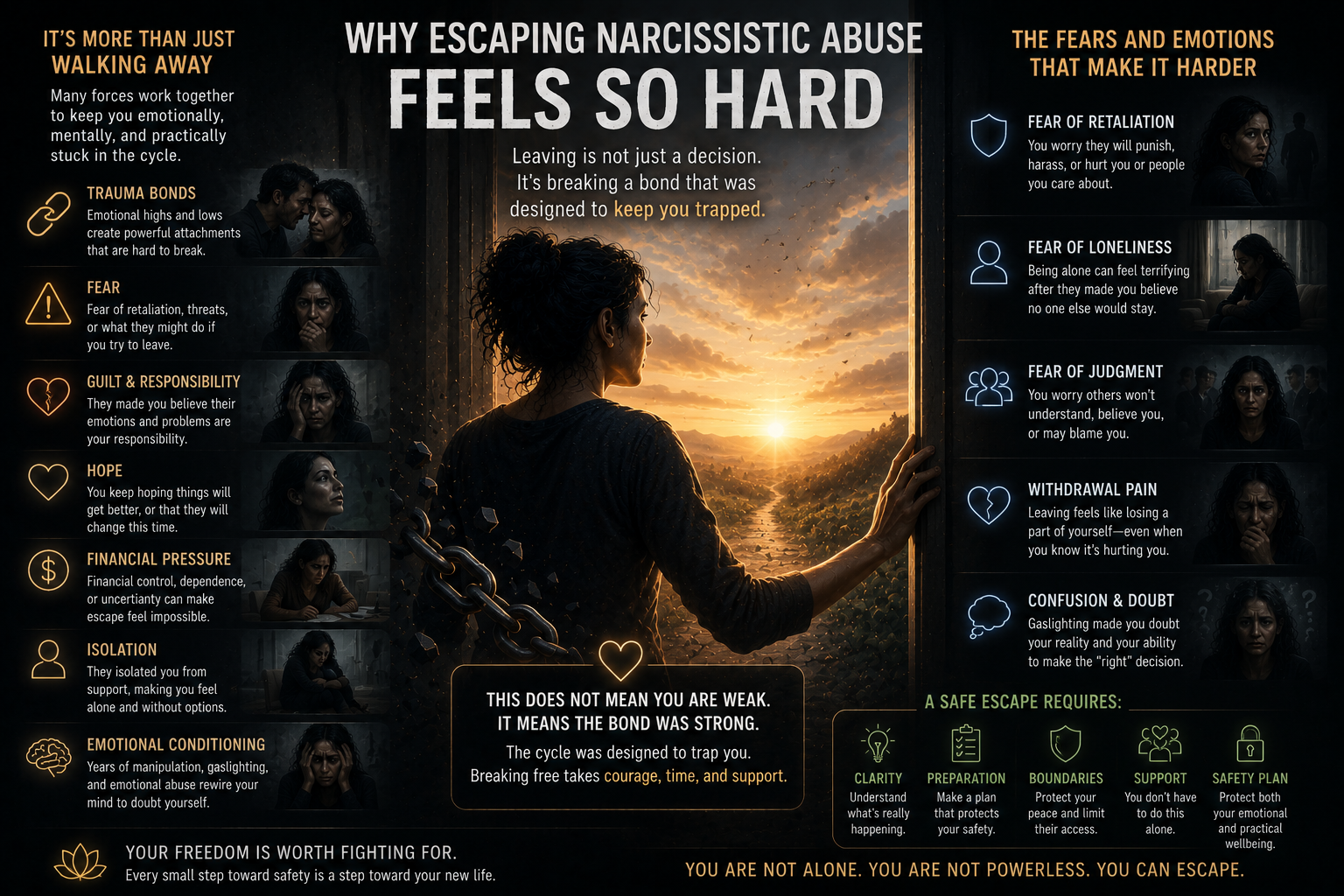
Why escaping narcissistic abuse feels so hard
Leaving a narcissistic relationship is rarely just a practical decision. Trauma bonds, fear, guilt, hope, financial pressure, isolation, and emotional conditioning can make escape feel overwhelming.
Survivors may fear retaliation, loneliness, judgment, or the pain of withdrawal from the relationship. This does not mean they are weak — it means the bond has been reinforced through emotional highs and lows.
A safe escape often requires clarity, preparation, boundaries, support, and a plan that protects both emotional and practical safety.
You do not need to escape perfectly. You need to begin safely.
The Narcescape guide helps survivors understand narcissistic abuse, break trauma bonds, create emotional distance, build boundaries, and take practical steps toward freedom and recovery.
Start your escape