The recovery phase: rebuilding your identity, peace, and emotional freedom
Recovery begins when survivors start reconnecting with themselves after prolonged emotional manipulation, trauma bonding, psychological exhaustion, and narcissistic abuse. Healing is not instant — but clarity, stability, and peace slowly return.
What is the recovery phase?
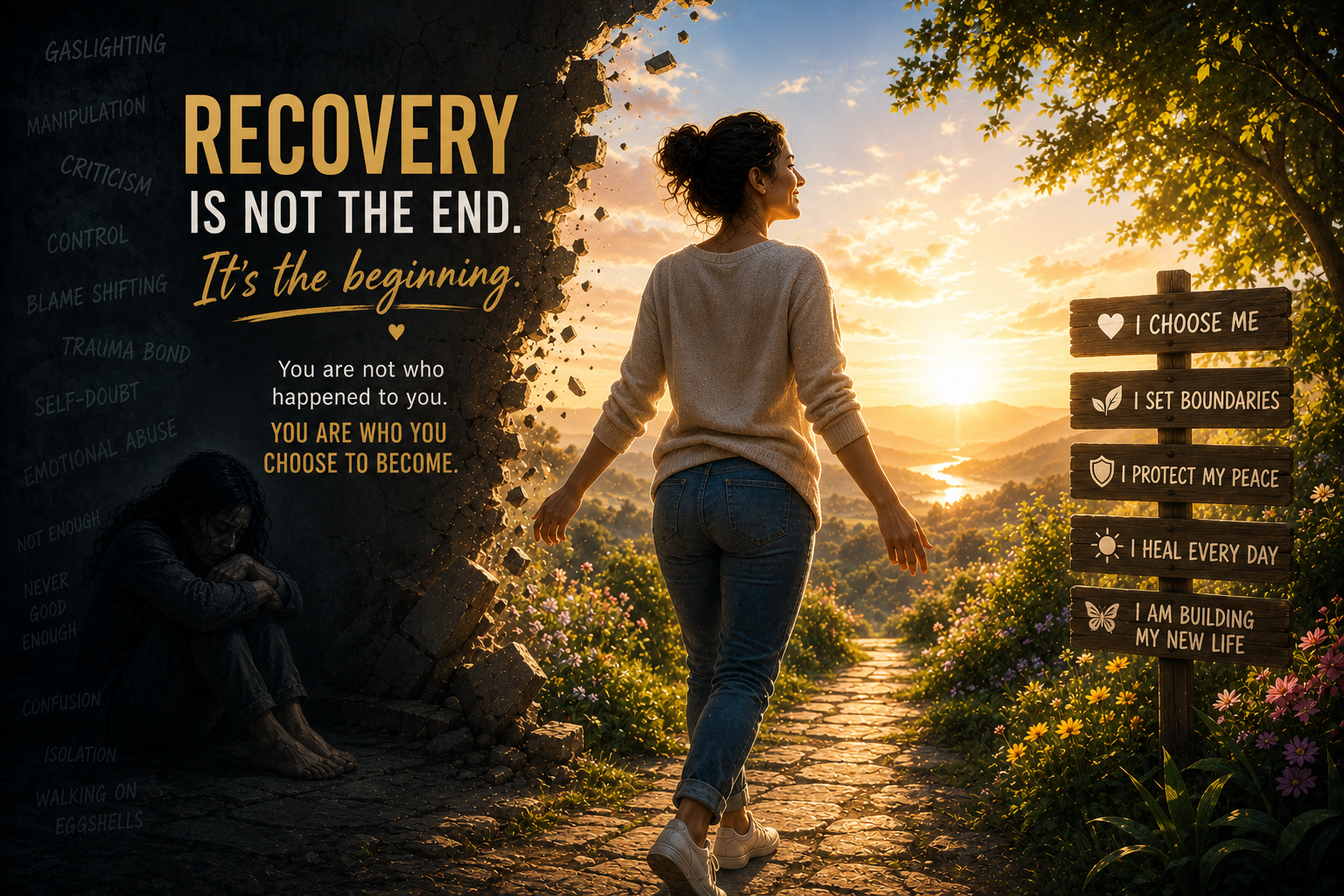
The recovery phase is the process of emotionally, mentally, and physically rebuilding after narcissistic abuse. Survivors slowly reconnect with their identity, boundaries, confidence, emotional stability, and sense of safety.
Recovery is not linear. Many survivors experience waves of grief, anger, sadness, relief, anxiety, and hope while their nervous system gradually stabilizes and the trauma bond weakens.
Survivors often describe this stage as:
Signs of emotional recovery
Recovery often begins quietly. Small moments of clarity, calm, confidence, and emotional safety slowly return.
Reconnecting with yourself
You slowly rediscover your identity, values, interests, and emotions.
Stronger boundaries
You begin protecting your peace instead of abandoning yourself for others.
Mental clarity returns
Brain fog, confusion, and self-doubt slowly begin fading.
Self-worth improves
You stop measuring your value through the narcissist’s approval.
Nervous system healing
Anxiety, hypervigilance, and emotional overwhelm gradually decrease.
Hope returns
You begin imagining a future built around peace instead of survival.
Why recovery takes time
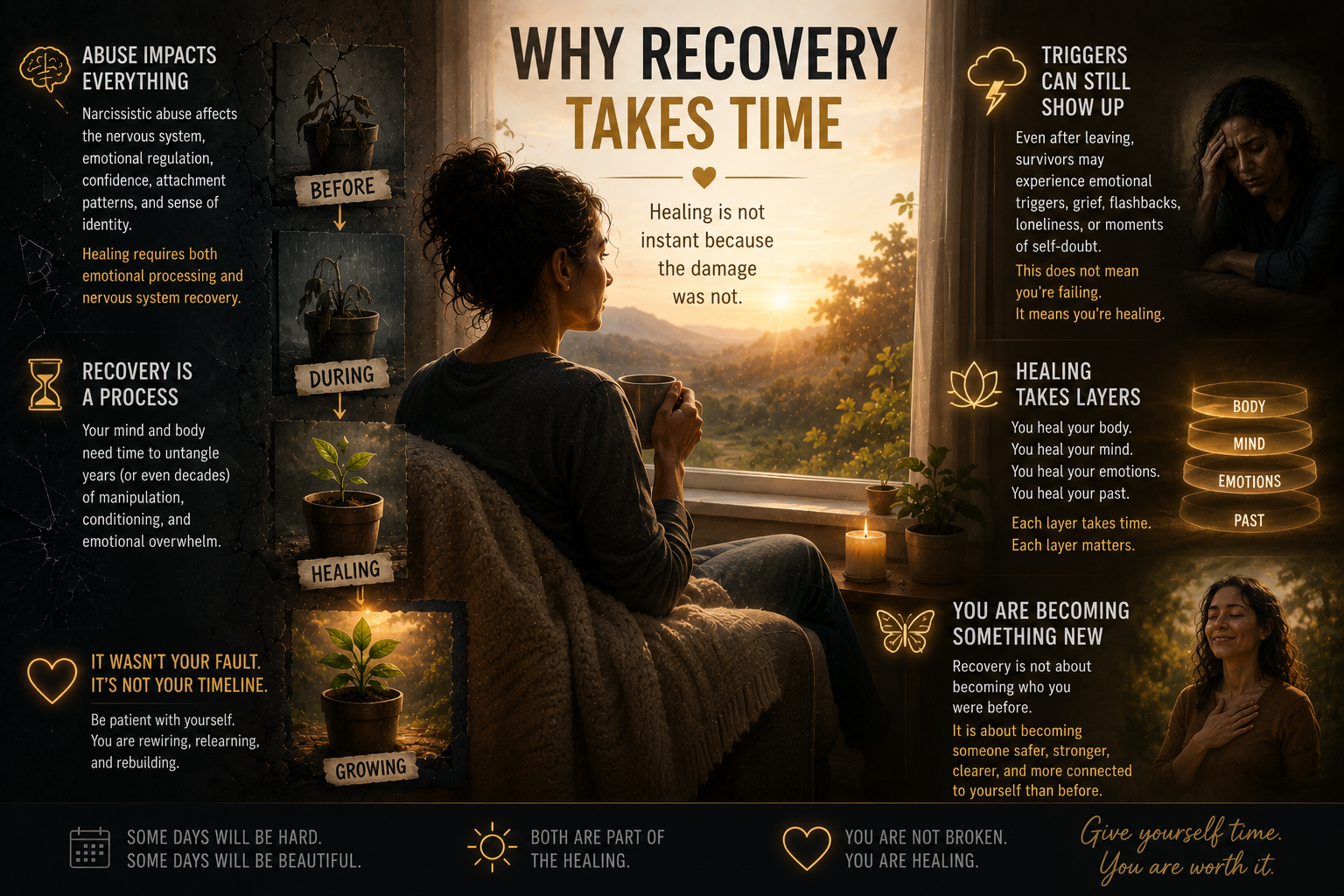
Narcissistic abuse affects the nervous system, emotional regulation, confidence, attachment patterns, and sense of identity. Healing requires both emotional processing and nervous system recovery.
Survivors may still experience emotional triggers, grief, flashbacks, loneliness, or moments of self-doubt — even after leaving the relationship.
Recovery is not about becoming who you were before. It is about becoming someone safer, stronger, clearer, and more connected to yourself than before.
Your story does not end with survival
The Narcescape guide helps survivors understand narcissistic abuse, trauma bonds, nervous system recovery, emotional healing, and practical steps toward rebuilding peace, confidence, and freedom.
Start your healing